Quick answer
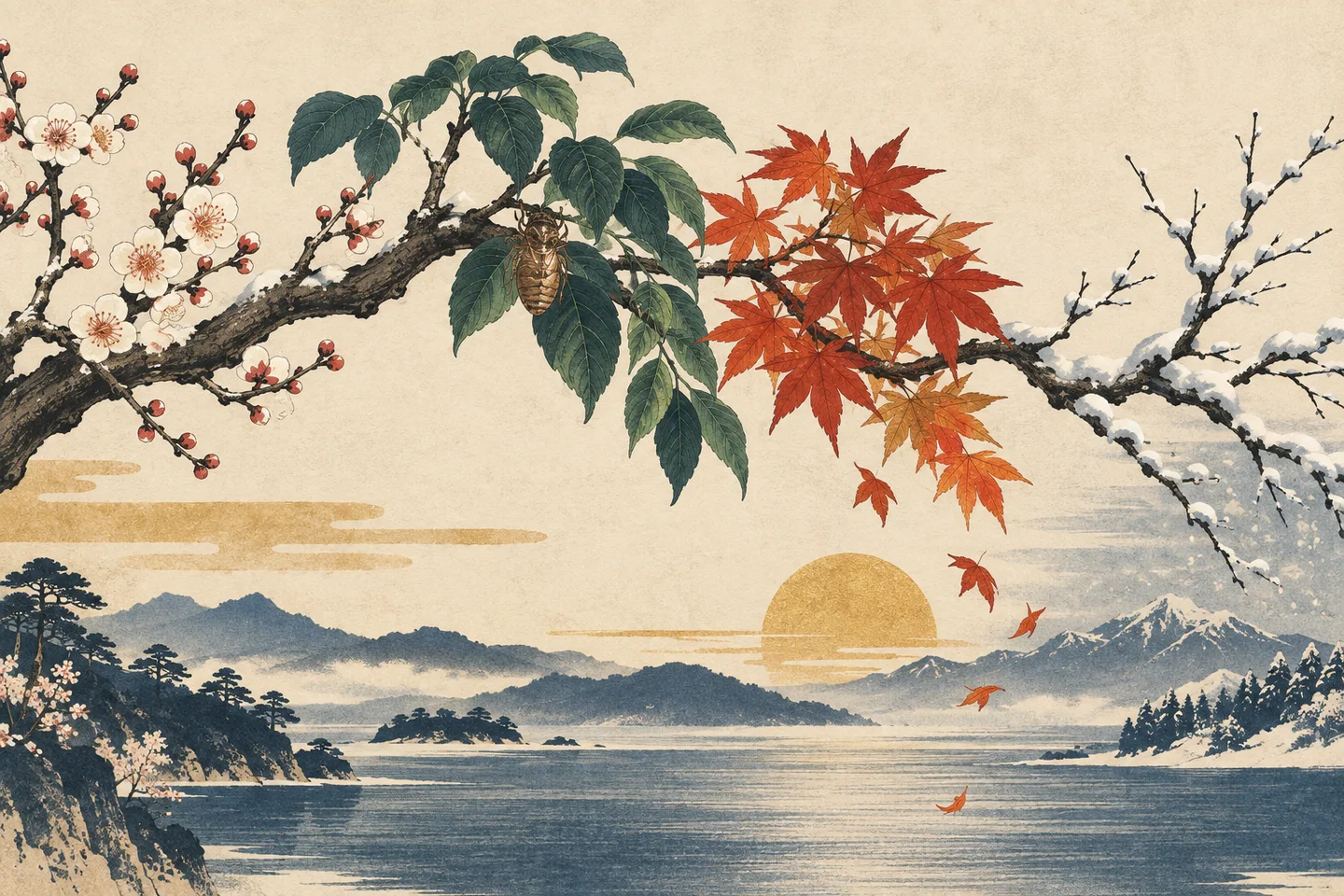
Kigo is a seasonal word or phrase that places a haiku within a shared natural and cultural cycle. It may name the season directly, but an image such as cicadas, first frost, or plum blossoms is usually more evocative.
What a season word does
A kigo provides time, weather, memory, and emotional association in very little space. Rather than writing 'it was autumn,' a poet might show one red leaf stuck to a wet bicycle seat.
Traditional Japanese poets draw from seasonal almanacs called saijiki. English-language writers can learn from that precision while paying attention to the actual climate and culture of their own place.
Seasonal image bank
Use this list as observation prompts, not as decorative ingredients.
- Spring: thaw, nesting birds, pollen, late snow, seedlings
- Summer: cicadas, long light, storm heat, sprinklers, fireflies
- Autumn: migration, dry grass, school bells, first frost, seed heads
- Winter: bare branches, salt trucks, breath, early dark, frozen puddles
Avoid the postcard effect
Cherry blossoms and moonlight can be powerful, but familiar symbols need a fresh circumstance. Ask what the image is doing now: caught in a drain, reflected in a vending machine, or falling on an abandoned glove.
First warm eveningthe screen door opens and shutswithout anyone
Warm evening and the screen door suggest a season through lived detail rather than a label.
Observe the season where you live
Season does not arrive in the same way everywhere. Snow may be central to one winter and impossible in another; monsoon rain, wildfire smoke, migration, or school calendars may organize local experience more accurately. Build a personal season list by recording first appearances and disappearances. Note plants, insects, work, clothing, food, light, and neighborhood sounds rather than relying only on inherited symbols.
This local attention keeps kigo from becoming costume. A reference gains authority when it is observed precisely: not simply spring flowers, but pear petals collecting in a storm drain after an overnight wind. The image can still connect to shared ideas of renewal or impermanence, yet it begins in a place the poet genuinely knows.
Let one seasonal detail carry several meanings
A good season word does more than date the scene. First frost changes texture, temperature, color, and the behavior of plants and people. Cicadas provide heat, sound, time of day, and a sense of intensity. Choose an image that participates in the poem's action instead of sitting beside it as a label. The seasonal element should affect what can happen in the scene.
Avoid stacking several obvious markers when one will do. Snow, bare trees, winter coats, and December in the same haiku leave little room for discovery. Select the detail with the strongest sensory role, then use the remaining syllables for a second perception. Restraint allows the season to feel present without being announced repeatedly.
Understand cultural context
Traditional Japanese kigo belong to a long literary conversation preserved in saijiki, seasonal almanacs that include example poems and associations. A word may carry historical or cultural resonance that a simple translation cannot show. When reading translated haiku, consult notes and multiple sources before assuming that a familiar natural object functions identically in every context.
English-language writers can respect that tradition without borrowing symbols mechanically. Learn the history, credit translations, and avoid presenting a local list as a universal Japanese system. At the same time, develop seasonal vocabulary rooted in your own climate and community. Respect grows from careful study and accurate description, not from imitating a surface aesthetic.
Revise a generic seasonal image
If a draft begins autumn leaves fall, ask five questions: which tree, where do the leaves land, what moves them, what sound do they make, and what else is happening? The answers might produce sycamore leaves scraping across an empty basketball court. The season remains clear, but the revised image now has place, motion, and an unexpected human scale.
Next, look for a cut. Pair the seasonal event with something that alters its meaning: a scoreboard still lit, a chalk line disappearing, or one player returning for a forgotten bottle. Do not explain nostalgia or change. Let the observed details create those possibilities. This process turns a decorative season word into the structural center of a haiku.
Build a personal seasonal glossary
Divide a notebook into early, middle, and late periods for each local season. Add dated observations instead of isolated nouns: first mosquito at the porch light, school buses before sunrise, cottonwood fluff against a screen. Dates help you notice cycles and exceptions, while full phrases preserve the physical context needed for future poems.
Review the glossary monthly and mark images that carry more than one association. A generator starting after an ice storm may suggest weather, work, sound, and neighborhood dependence at once. Use the list as a return path to lived moments, not as a menu to decorate unrelated drafts. Authentic kigo begins in repeated attention.
Include human and civic signs of season as well as plants and weather. Market hours, road salt, festival cleanup, irrigation schedules, and the angle of evening light can locate time with equal precision. The glossary should describe a lived calendar rather than a borrowed catalogue.
Use the checker, then trust the poem
Syllable estimates are useful for revision, but pronunciation varies and form is only one part of haiku. Read the draft aloud, preserve the clearest image, and choose the count that matches the way you intend the poem to be heard.
Check your haiku